
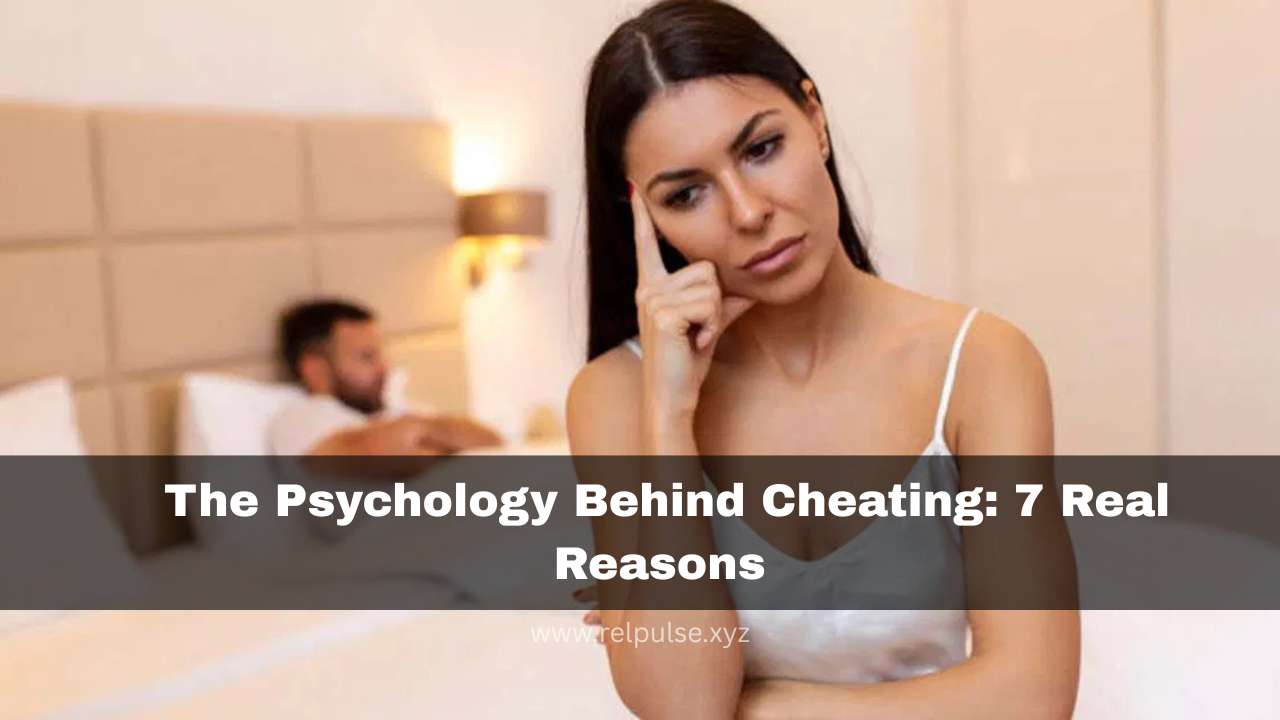
Infidelity is one of the most painful betrayals a person can experience. When you discover that a partner has cheated, the first question that screams in your mind is usually, Why? Was I not enough? Did they ever love me? Is he or she just a bad person?
We often view cheating through a simple lens: a villain and a victim. However, the psychology behind cheating is rarely black and white. It is a murky grey area filled with unmet needs, emotional immaturity, opportunity, and sometimes, deep psychological wounds. Even people who claim to love their partners and value their families can find themselves entangled in an affair.
Understanding why it happens does not excuse the behavior. Cheating is a choice, and it causes devastation. But if you want to understand human behavior or heal from an affair you have to look under the hood. In this article, we will dissect the psychology behind cheating to reveal the 7 real, often surprising, reasons why people cross the line.
1. The Search for a “New Self” (Identity Crisis)
One of the most fascinating findings in relationship psychology is that affairs are often not about finding a new partner, but about finding a new self.
The Mirror Effect
When you have been with someone for years, they know you as the “responsible dad,” the “tired mom,” or the “stressed employee.” You are locked into a role. An affair partner, however, sees you as someone fresh. To them, you are sexy, mysterious, and funny.
Esther Perel, a renowned therapist, suggests that people cheat to reconnect with lost parts of themselves. They aren’t looking for another person; they are looking for another version of themselves that feels alive. This aspect of the psychology behind cheating explains why people in happy marriages sometimes stray they miss who they used to be, not who their partner is.
2. Insecure Attachment and The Need for Validation
For some, an empty void inside them constantly demands to be filled. This is often linked to an “insecure attachment style.” People who are anxious or avoidant may use cheating as a way to regulate their self-esteem.
The Ego Boost
If someone feels unworthy or unlovable deep down, one partner’s love is never enough. They need a constant stream of new validation to feel okay. The “high” of someone new desiring them acts like a drug. It momentarily silences their inner critic.
In this case, the psychology behind cheating is rooted in deep insecurity. The cheater is using the affair partner as a mirror to tell them, “You are desirable,” because they cannot generate that feeling internally.
3. Conflict Avoidance and Passive-Aggression
Surprisingly, “nice” people cheat too. Specifically, people who are terrified of conflict. Instead of saying, “I am unhappy,” or “I want to break up,” they act out.
The “Exit Affair”
Some people cheat as a subconscious way to blow up a relationship they don’t have the courage to end verbally. They leave clues or get sloppy because, deep down, they want to get caught. They use the infidelity as a crowbar to pry open the exit door.
Other times, it is passive revenge. If they feel controlled or unheard in the marriage, cheating becomes a secret rebellion. It is a way to reclaim power without having a direct confrontation. This cowardly approach is a major component of the psychology behind cheating.
4. Emotional Neglect and Loneliness
While sexual desire is a factor, emotional hunger is often the stronger driver. Loneliness in a relationship feeling unseen while sitting right next to someone is a powerful trigger.
The “Friend” Who Became More
It often starts innocently. You vent to a coworker or a friend about your life. They listen. They validate you. Suddenly, you feel an emotional intimacy that is missing at home. The psychology behind cheating here is a slippery slope.
It isn’t that they woke up planning to cheat. It is that they were emotionally starving, and when someone offered them a crumb of connection, they feasted. They bonded emotionally before they ever touched physically. This is why emotional affairs can feel even more damaging than physical ones.
5. Opportunity and Impulse Control (The situational Cheater)
Not every cheater has a deep, dark reason. Sometimes, it is simply a failure of impulse control combined with opportunity.
The “Why Not?” Moment
Psychologists note that context matters. High-risk environments (like late-night office parties or business trips) combined with alcohol can lower inhibitions. If a person has weak boundaries and a “present-focused” mindset (meaning they don’t think about future consequences), they might cheat simply because the opportunity is there.
This type of cheating is often transactional and lacks emotional depth. It is a failure of character and discipline rather than a search for meaning. Understanding this impulsive side of the psychology behind cheating helps explain the “one-night stand” that ruins a decades-long marriage.

6. Narcissism and Entitlement
We cannot talk about infidelity without talking about narcissism. For a narcissist, the rules simply do not apply.
The Rules are for Other People
A narcissist feels entitled to whatever they want. They might love their spouse, but they feel they “deserve” the extra attention on the side. They lack empathy, meaning they cannot truly grasp the pain they are causing their partner.
In the psychology behind cheating, the narcissist compartmentalizes. They put their spouse in one box and their lover in another, and in their mind, the two worlds never touch. They don’t feel guilt because they rationalize that their needs are paramount.
7. Trauma and Self-Destruction
Sometimes, cheating is a form of self-sabotage. People with a history of trauma or chaos may feel uncomfortable when life is too calm or too good.
Breaking the Good Things
If someone grew up in a chaotic home, a stable, loving marriage might feel boring or even unsafe (“waiting for the other shoe to drop”). Subconsciously, they might cheat to create chaos. They destroy the relationship because they don’t feel they deserve it, or because chaos feels like home to them.
This tragic element of the psychology behind cheating shows that infidelity can sometimes be a symptom of unresolved mental health issues rather than a reflection of the relationship’s quality.
Can a Relationship Survive Cheating?
Understanding the psychology behind cheating brings us to the ultimate question: Can you heal?
The answer is yes, but it is rare and difficult. “Once a cheater, always a cheater” is a popular saying, but psychology says it’s not always true. It depends on why they cheated.
- The Serial Cheater (Narcissist/Insecure): Unlikely to change. The internal void is too big.
- The One-Time Mistake (Situational/Loneliness): Can often be fixed if the root cause (neglect, boundaries) is addressed and true remorse is shown.
Healing requires the cheater to feel the pain they caused and for the betrayed partner to eventually let go of the anger. It is a reconstruction of the relationship from the ground up.
Conclusion
The psychology behind cheating is a tapestry woven from threads of insecurity, desire, fear, and ego. It is rarely as simple as “he found someone younger” or “she found someone richer.” It is usually a desperate, misguided attempt to solve an internal problem with an external person.
By understanding the real reasons people stray, we can stop blaming ourselves for our partners’ choices. We can also spot the warning signs the emotional disconnect, the eroding boundaries, the resentment before they turn into a betrayal.
Whether you are the betrayed, the cheater, or just an observer, knowing the truth about human behavior is the first step toward building honest, resilient relationships.
Ready to take the next step in your personal growth? Explore expert services from therapy to life coaching — available on Fiverr.
If you want to read more articles similar to The Psychology Behind Cheating: 7 Real Reasons we recommend that you enter our Love life category.
FAQs
1. Is cheating a sign they don’t love you?
Not always. As the psychology behind cheating shows, people can love their partners and still cheat due to self-sabotage, addiction, or compartmentalization. However, it is a sign they do not respect you or the relationship enough to protect it.
2. Do men and women cheat for different reasons?
Traditionally, it was thought men cheat for sex and women for emotion. However, modern psychology sees this gap closing. Both genders cheat for validation, variety, and emotional connection. The motivations are becoming more similar as gender roles evolve.
3. Can a person cheat and never do it again?
Yes. If the cheating was a result of a specific situation or a lapse in judgment, and the person feels genuine remorse and does the work (therapy, boundaries), they can remain faithful. Serial cheaters, however, rarely stop.
4. Why do people blame the betrayed partner?
This is “victim blaming.” It is easier for the cheater to say, “You were cold to me,” than to admit, “I have poor character.” Friends might blame the victim to distance themselves from the fear that it could happen to them, too.