
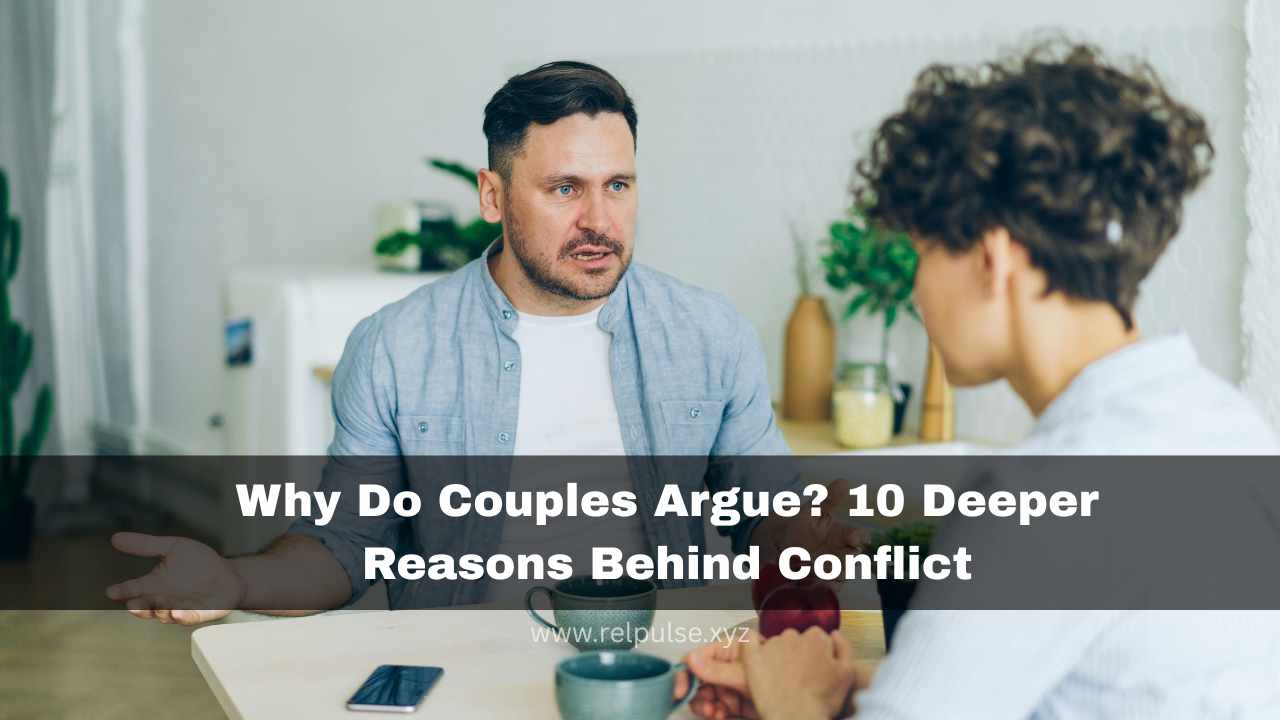
Arguments happen in every relationship, even in the healthiest ones. In fact, most relationship experts agree that the issue isn’t that couples argue but why couples argue and how they communicate during disagreements. When you understand the emotional and psychological roots of conflict, arguments stop feeling like relationship failures and start becoming opportunities for growth.
The surprising truth is that the topics couples fight about money, sex, chores, parenting are rarely the real issue. These surface triggers simply expose deeper emotional needs, attachment wounds, insecurities, or communication breakdowns.
Below is a deeper look at the real reasons couples argue, the psychology behind these conflicts, and how to break negative cycles for good.
Part 1: The Core Four Surface Triggers (The “What”)
These are the topics couples argue about most often. But each one represents something deeper beneath the surface.
1. Money and Finances (Security and Power)
When couples argue about money, it’s almost never just about the numbers. It’s about what money represents security, stability, independence, freedom, or power.
Why couples argue about money:
- One partner spends for pleasure → the other saves for safety
- One sees money as freedom → the other sees it as protection
- One wants joint accounts → the other wants financial independence
The deeper issue:
A disagreement about buying something expensive may actually be an argument about trust, future plans, or who gets to make final decisions.
2. Chores and Division of Labor (Fairness and Respect)
This is one of the most common reasons couples argue. But again, it’s hardly ever about the laundry or the dishwasher.
Why couples argue about chores:
- One partner feels overwhelmed and unsupported
- One feels controlled or criticized
- One believes their contributions go unnoticed
The deeper issue:
It’s not “Do the dishes.” It’s:
- “Do you respect my time?”
- “Do you value what I do?”
- “Am I being taken for granted?”
Chores become symbolic of emotional investment.
3. Sex and Intimacy (Rejection and Vulnerability)
Another major reason couples argue is intimacy. However, the fights are rarely about sex alone.
Why couples argue about intimacy:
- One partner feels rejected
- One partner feels pressured
- One partner wants emotional closeness first
- One sees sex as reassurance of love
The deeper issue:
For the partner with higher desire → lack of sex feels like emotional abandonment.
For the partner with lower desire → pressure feels like emotional disconnection.
4. Parenting Differences (Values and Identity)
Few topics trigger deeper emotions than parenting. This is one area couples argue fiercely because it involves core beliefs.
Why couples argue about parenting:
- Discipline styles differ
- One is strict, the other lenient
- One prioritizes academics, the other emotional well-being
- One feels judged by the other
The deeper issue:
Parenting conflict reflects values, childhood wounds, and the legacy each partner wants to pass down.
Part 2: The Psychological Roots (The “Why”)
Beneath every topic from money to intimacy lies an emotional pattern that explains why couples argue.
5. Unmet Attachment Needs (Pursuer vs. Distancer)
This is the most common dynamic behind recurring fights.
The pursuer wants closeness talk more, solve now, connect emotionally.
The distancer needs space process alone, calm down, avoid intensity.
Why couples argue here:
- The pursuer’s chase triggers the distancer’s retreat
- The retreat triggers the pursuer’s anxiety
- The cycle escalates every conflict
Both partners end up feeling misunderstood and unloved.

6. Unspoken Expectations (The Hidden Relationship Rules)
Every person enters a relationship with invisible expectations shaped by their family and past experiences.
Examples:
- “You should plan date nights.”
- “You should help without being asked.”
Why couples argue:
When hidden expectations aren’t met, resentment builds even though they were never communicated.
7. Core Needs Going Unmet (Love Languages Clash)
Arguments often erupt because people express love differently.
If one partner’s love language is Quality Time but the other expresses love through Acts of Service, both can feel unloved even when love is present.
Why couples argue:
- They misinterpret the partner’s love
- They feel unseen
- They don’t feel emotionally nourished
- They believe the partner “doesn’t care”
Part 3: The Communication Failures (The “How”)
Couples argue destructively when their communication breaks down. Dr. John Gottman identifies four behaviors that can predict divorce if not addressed.
8. Criticism
Criticism attacks the partner’s character, not their behavior.
Examples:
- “You’re so lazy.”
- “You never think about anyone but yourself.”
When couples argue through criticism, the other partner becomes instantly defensive.
9. Contempt
The most dangerous behavior.
Contempt includes:
- Eye rolling
- Sarcasm
- Mocking
- Name-calling
- Tone of superiority
Why couples argue gets worse with contempt:
It destroys admiration and respect the foundation of love.
10. Defensiveness & Stonewalling
When couples argue defensively, neither takes responsibility.
Stonewalling occurs when one partner emotionally shuts down.
Why this escalates conflict:
- The defensive partner feels attacked
- The stonewaller feels overwhelmed
- Both partners feel unheard
This is the moment arguments go from repairable to painful.
Conclusion
Couples argue for deeper emotional reasons unmet needs, insecurities, childhood patterns, and communication gaps. The good news is that conflict doesn’t mean a relationship is broken. In fact, the healthiest relationships still argue they just argue constructively.
To transform conflict into connection:
- Replace criticism with “I feel…” statements
- Listen instead of defending
- Take breaks when emotions escalate
- Return to repair the connection
- Share unmet needs clearly
- Practice empathy instead of judgment
When couples argue with understanding rather than fear, arguments become opportunities for closeness not separation.
Ready to take the next step in your personal growth? Explore expert services from therapy to life coaching — available on Fiverr.
If you want to read more articles similar to Why Do Couples Argue? 10 Deeper Reasons Behind Conflict we recommend that you enter our Love life category.
FAQs
1. Is it normal that couples argue a lot?
Yes, it’s normal that couples argue. What matters is how you repair afterward. If arguments help resolve issues and deepen understanding, they are healthy.
2. Why do couples argue over small things?
Small issues usually represent deeper emotional needs respect, love, trust, or fairness. The “small thing” is often a symbol of something bigger.
3. Are frequent arguments a sign of incompatibility?
Not necessarily. Frequent arguments may mean communication patterns need improvement. However, if contempt or disrespect is constant, it might indicate deeper incompatibility.
4. How do we stop arguing all the time?
- Identify the real root issue
- Use calm communication techniques
- Take breaks before anger escalates
- Learn each other’s attachment styles
- Address unspoken expectations
5. When do arguments become unhealthy?
Arguments become toxic when there is:
- Name-calling
- Contempt
- Fear
- Avoidance
- No repair after fights
Healthy conflict includes repair, empathy, and resolution.