

Clues left by cheaters often appear long before infidelity is confirmed. Infidelity is one of the most difficult emotional blows to cope with in a relationship. When suspicion arises, the mind begins to fill with doubts, intuitions, and contradictions. There isn’t always obvious proof, but there are subtle emotional, behavioral, or digital signs that can reveal something has changed in the couple’s dynamic.
Although every story is different, unfaithful people often leave unintentional traces—the classic clues left by cheaters, such as changes in communication, alterations in habits, avoidant behavior, or a new way of interacting with their phone and social media. Detecting these signs isn’t meant to promote distrust, but rather to help recognize when something doesn’t add up and when it’s necessary to have a clear conversation.
In this Psychology-Online article, we’ll explore the main emotional signs that can indicate potential infidelity, the most frequent physical and behavioral clues, and the digital indicators that often go unnoticed. We’ll also offer guidance on what questions to ask to respectfully confirm your suspicions without losing your emotional composure, and what steps to take if you discover infidelity—so you can protect yourself and make decisions calmly rather than driven by anger or fear.
Emotional signs of an unfaithful partner
Before concrete evidence appears, subtle emotional changes are often noticed:
- The unfaithful person may appear more distant , with less interest in conversations, affection, or shared plans.
- Sometimes, he avoids physical contact or reacts irritably to everyday issues that previously did not cause conflict.
- Another common sign is the change in emotional availability , when they go from being attentive and communicative to appearing cold, distracted, or giving vague answers.
- Guilt or overcompensation may also appear , with the person being overly kind or attentive to disguise their behavior.
- Mood swings such as sudden euphoria, nervousness, or defensiveness are also indicators.
In general, if you notice that their emotional energy is no longer with you, but elsewhere, it’s time to pay attention without falling into paranoia.

Physical or behavioral clues that betray a cheater
Although everyone is different, infidelity often leaves visible signs in daily behavior . It’s not about making accusations without proof, but about recognizing changes that, taken together, can indicate that something has shifted in the relationship.
- Sudden changes in physical appearance, such as a new style of clothing, perfume, or hairstyle.
- Pay more attention to your personal appearance just before going out, even for everyday activities.
- More frequent use of the mobile phone or keeping it locked and face down at all times.
- Evasiveness or irritation when you ask who they are talking to or where they have been.
- Increased departures without clear explanation, especially at unusual times.
- Decreased sexual interest or, conversely, sudden changes in desire.
- Defensive attitude or constant defensiveness, even towards unimportant issues.
- Excessive scrutiny of your movements or attempts to project blame, such as accusing yourself of distrust.
- A change in their communication style, with short, cold messages or a lack of curiosity about your day.
- Emotional distance: no longer shares thoughts, emotions, or projects.
- Unclear expenses or money movements.
- A smell of perfume or tobacco that you can’t identify.
- Avoid eye contact or spontaneous displays of affection.
- Secret behaviors with the computer or social networks.
- Absences or small lies that accumulate and create inconsistencies.
None of these signs alone confirms infidelity, but when several coincide, they can be an indication that something has broken down in the trust of the relationship and it is advisable to address the situation calmly and through dialogue.
Signals in digital life: social networks and mobile phones
In the digital age, many infidelities leave traces in the virtual world. Changes in mobile phone or social media use are often among the first signs that raise suspicions. If your partner previously shared their online activity freely and now seems more reserved or protective of their phone , they might be hiding something.
Some common warning signs include blocking on-screen notifications, deleting chat or call histories, or changing passwords for no apparent reason. An increase in online time may also be noticeable , especially at night or at unusual hours.
On social media, you might notice new frequent contacts , changes in posting habits, or an overemphasis on their image. Sometimes they stop tagging you, avoid posting photos together, or start following people who weren’t previously in their usual circle.
While these signs aren’t conclusive proof, they can reflect an emotional disconnect or the presence of secrets. When in doubt, the healthiest approach isn’t to spy, but to speak calmly and honestly, seeking clarity instead of confrontation
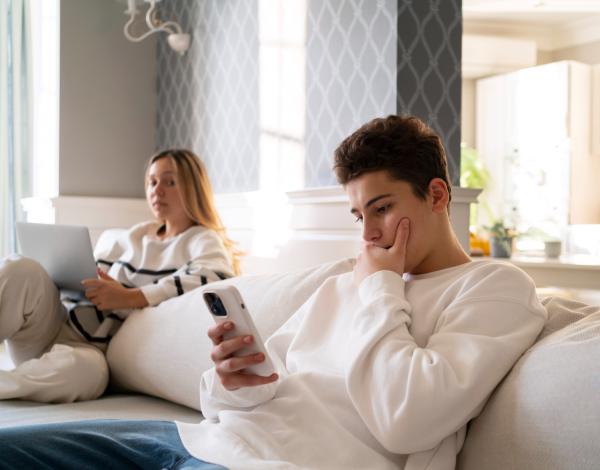
What questions should you ask to find out if your partner is cheating on you?
If you suspect infidelity, the most important thing is to approach the conversation calmly , not accusingly. Your questions should encourage dialogue, not defensiveness. Start with open-ended questions that help you understand their behavior:
- I’ve noticed you’ve been more distant lately, is something wrong?
- I feel like something has changed between us, how are you feeling in the relationship?
- Is there something you’d like to tell me but haven’t been able to?
- If the answers are evasive or contradictory, you can be more direct:
- Is there someone else in your life?
- Do you feel that our relationship no longer fulfills you?
These questions require courage and a willingness to listen, even if the answer hurts. Speaking with respect and honesty allows us to gain clarity without losing our dignity. It’s not about winning an argument, but about discovering the truth so we can make informed decisions.
What to do if you discover that your partner is cheating on you?
Discovering infidelity has a huge emotional impact. It’s normal to feel anger, sadness, confusion, or disbelief. Before making any decisions, allow your emotions to subside and don’t act impulsively. Breathe, seek support from someone you trust, and give yourself time to think.
Next, decide if you want to talk to your partner to understand what happened or if you prefer to take a step back. Listening doesn’t mean justifying, but rather seeking clarity . Analyze whether both of you are genuinely willing to repair the damage or if it’s best to end things.
Avoid giving in to the impulse for revenge or guilt. Infidelity says more about the person who commits it than the person who suffers it. Prioritize your emotional well-being , set boundaries, and, if needed, seek professional help to process the pain and rebuild your trust, both in yourself and in others.

This article is for informational purposes only. we are not qualified to make a diagnosis or recommend treatment. We encourage you to consult a psychologist to address your specific situation.
Conclusion
Catching the clues left by cheaters isn’t about paranoia — it’s about paying attention to behaviors that consistently break trust. While no single sign confirms infidelity, a pattern of secrecy, emotional distance, unexplained changes, and inconsistent stories can indicate that something is wrong.
Remember, your intuition is a powerful tool. If you sense that something is off, don’t ignore it. Healthy relationships are built on transparency, respect, and open communication. If your partner repeatedly hides things, invalidates your concerns, or behaves in suspicious ways, it’s important to trust your instincts and address the situation honestly.
Whether you choose to work through the issue or walk away, protecting your emotional well-being should always come first. You deserve a relationship where loyalty is clear and you never have to play detective.
Ready to take the next step in your personal growth? Explore expert services from therapy to life coaching — available on Fiverr.
If you want to read more articles similar toClues left by cheaters: how to detect them in time
we recommend that you enter our Love life category.
FAQs
1. What are the most common clues cheaters leave behind?
Frequent hidden phone use, emotional distance, inconsistent explanations, sudden schedule changes, grooming changes, or unexplained irritability often appear when a partner is cheating.
2. Does finding one clue automatically mean my partner is cheating?
No. One sign alone is not enough. Look for patterns — repeated secrecy, lies, behavioral shifts, or avoidance that consistently make you uncomfortable.
3. Why do cheaters leave clues?
Cheaters often struggle to maintain two lives, which leads to mistakes: forgetting lies, hiding messages poorly, changing routines, or acting unusually protective of their devices.
4. Should I confront my partner if I suspect cheating?
Yes, but calmly. Share specific behaviors, not accusations. Example: “I noticed you’ve been hiding your phone lately — it makes me uncomfortable. Can we talk about it?”
5. How accurate is intuition when it comes to cheating?
Many people report that their “gut feeling” was correct. Intuition isn’t proof, but it often picks up subtle shifts in behavior or emotional connection.
6. What should I do if I find real evidence?
Decide what is best for your emotional health. This may include setting boundaries, seeking clarity, couple’s therapy, or ending the relationship if trust is broken.
7. Is it possible to rebuild trust after cheating?
Yes, but only if both partners are willing to be honest, transparent, and committed to healing. It requires time, effort, and consistent behavior change.