Feeling that your own family doesn’t love or value you can be one of the most painful experiences there is. Family is usually our first emotional bond, the place where we learn what love, care, and belonging are. That’s why, when those bonds break or become harmful, the emotional impact can be profound. However, it’s not always easy to recognize when a family stops being a safe space: sometimes the lack of love manifests as indifference, constant criticism, or a lack of support
In this Psychology-Online article, we’ll discuss the main signs that your family doesn’t love you or isn’t caring for you as you deserve, how to act when you don’t feel good in that environment, and what steps you can take to overcome the pain and build healthier, more restorative relationships. We’ll also see when it might be necessary to create distance, not out of resentment, but out of a need to protect your emotional well-being and regain your inner peace.
7 signs that your family doesn’t love you
Sometimes you don’t need someone to tell you directly to feel unloved within your family. Lack of family love can be expressed in subtle, everyday ways, and over time, it can erode your self-esteem and inner peace. Here are some clear signs that your family isn’t loving you the way you need and deserve:
1. They make you feel like you do everything wrong
If everything you do is criticized or judged, and you rarely receive words of support or recognition, it’s a sign of a lack of love and validation . Families who truly love correct with respect and empathy, not with humiliation. When you grow up or live in an environment where you are made to feel inadequate, you learn to doubt yourself and constantly seek approval.
2. They don’t listen to you or show interest in your emotions
Emotional disinterest is a silent form of abandonment. If you try to talk about how you feel and they change the subject, ridicule you, or tell you you’re exaggerating, there’s a lack of empathy and connection . Not being asked how you are or not being there for you during difficult times can make you feel invisible in your own home.
3. They use you or only seek you out when they need something
There are families who only appear when it suits them, whether for money, favors, or emotional support. If you feel your worth depends on what you can give and not on who you are, you’re in an unbalanced family relationship . Authentic love isn’t measured by usefulness, but by unconditional presence.
4. They constantly compare you to others
Comparisons destroy self-esteem and reflect a lack of acceptance . If your family compares you to siblings, cousins, or even strangers (“look how so-and-so does it”), they’re conveying that you’re not enough as you are. This attitude breeds insecurity and can make you feel like you’ll never measure up.
5. They invalidate your story or memories
When you try to talk about something that hurt you and they say “that never happened” or “you’re making it up,” they’re denying your emotional experience. This form of invalidation is very damaging because it makes you doubt your own perception and prevents you from healing past wounds. Loving also involves acknowledging mistakes and offering amends.
6. They don’t respect your boundaries
If every time you say “no” your family gets offended, blames you, or manipulates you, they are not respecting your autonomy . Healthy love accepts boundaries and does not demand submission. Having boundaries is not a lack of affection: it is a way of taking care of you and protecting your emotional balance.
7. They make you feel guilty for seeking your well-being
When you decide to distance yourself, create space, or prioritize yourself, and this is interpreted as selfishness, you are probably in a toxic relationship . Families that truly love you celebrate your growth, even if it means separating from them for a while. If they blame you or make you feel bad for taking care of yourself , it is a clear sign that the love is conditional.
Recognizing these signs doesn’t mean you should cut ties immediately, but it does mean opening your eyes and accepting that family love, when it hurts more than it heals, ceases to be love and becomes a form of emotional harm.
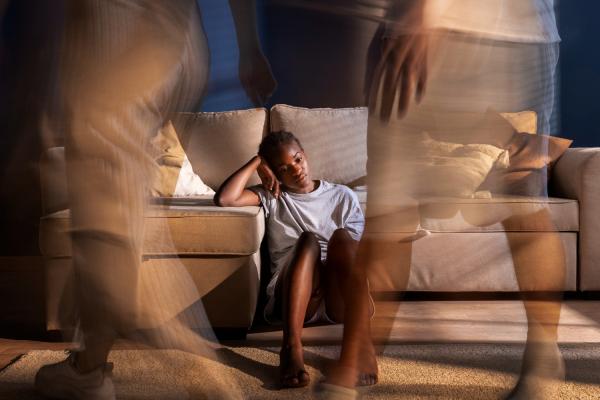
What to do when you don’t feel good with your family?
When you don’t feel good with your family:
- The first thing is to acknowledge your emotions without guilt . It’s normal to feel sadness, anger, or disappointment in the face of family neglect.
- Try to set boundaries to protect your well-being and avoid getting into arguments that only wear you down.
- If living together is difficult, find your own space and surround yourself with people who bring you calm and genuine support
- You can also go to therapy to understand the origin of your wounds and learn to relate from a place of emotional autonomy.
Remember that you don’t need to earn anyone’s affection: you deserve respect and well-being simply for being who you are
How to overcome feeling like your family doesn’t love you?
Overcoming the feeling that your family doesn’t love you involves accepting that you can’t change others , but you can transform the way you relate to yourself.
Start by healing the wound of rejection by recognizing that your worth doesn’t depend on the love you receive . Surround yourself with people who make you feel seen, heard, and loved, even if they aren’t blood relatives.
Practice self-esteem and self-care every day : speak kindly to yourself, celebrate your achievements, and allow others to support you respectfully. Over time, you’ll understand that family can also be chosen, and that building healthy bonds is a form of freedom and emotional healing.

When should you distance yourself from family?
Distancing yourself from family doesn’t mean a lack of love; it’s acting out of emotional survival. It’s time to create distance when living together or constant contact generates anxiety, guilt, or pain , and your attempts at dialogue go unheard
Also when there is psychological violence, manipulation, or continuous disrespect . Sometimes, distancing yourself isn’t about breaking up, but about giving yourself space to heal and rebuild your identity without fear. You can maintain physical or emotional distance, as needed, prioritizing your mental health. Learning to say “enough” is an act of self-love, not selfishness. Remember, not every family is a home, and you deserve to live in peace, even if it means distancing yourself so you can breathe again.
Conclusion
Feeling like your family doesn’t love you can leave deep emotional wounds that affect your self-worth, relationships, and sense of belonging. But it’s important to understand that their behavior is a reflection of their emotional limitations—not your value as a person. You deserve love, respect, and emotional safety, even if your family failed to provide that.
Healing begins with recognizing the signs, setting boundaries, seeking support from healthier relationships, and understanding that you can build a chosen family of people who truly care. Remember:
Your worth isn’t determined by how your family treats you you have the power to create a life filled with genuine love and connection.
Ready to take the next step in your personal growth? Explore expert services from therapy to life coaching — available on Fiverr.
If you want to read more articles similar to Signs that your family doesn’t love you and what to do we recommend that you enter our Love life category.
FAQs
1. What are common signs your family doesn’t love you?
Some signs include constant criticism, rejection, emotional neglect, manipulation, comparing you to others, ignoring your needs, or only contacting you when they want something.
2. Does feeling unloved mean my family truly doesn’t love me?
Not always. Many families struggle with communication, emotional intelligence, or unresolved trauma. Their inability to show love does not mean you’re unworthy of it.
3. What should I do if my family makes me feel unloved?
Start by acknowledging your feelings, setting boundaries, limiting contact with toxic relatives, and building supportive connections outside your family. Therapy can also help you heal past wounds.
4. How do I set boundaries with toxic family members?
Be clear, firm, and consistent. You can limit visits, refuse certain conversations, or reduce communication. Boundaries are not disrespect—they’re self-protection.
5. Is it okay to distance myself from family members?
Yes. If the relationship is emotionally harmful, distancing yourself can be healthy and necessary. Your mental well-being must come first.
6. Can I still heal if my family never changes?
Absolutely. Healing comes from understanding your pain, creating supportive relationships, and learning to validate yourself instead of seeking approval from those who hurt you.