
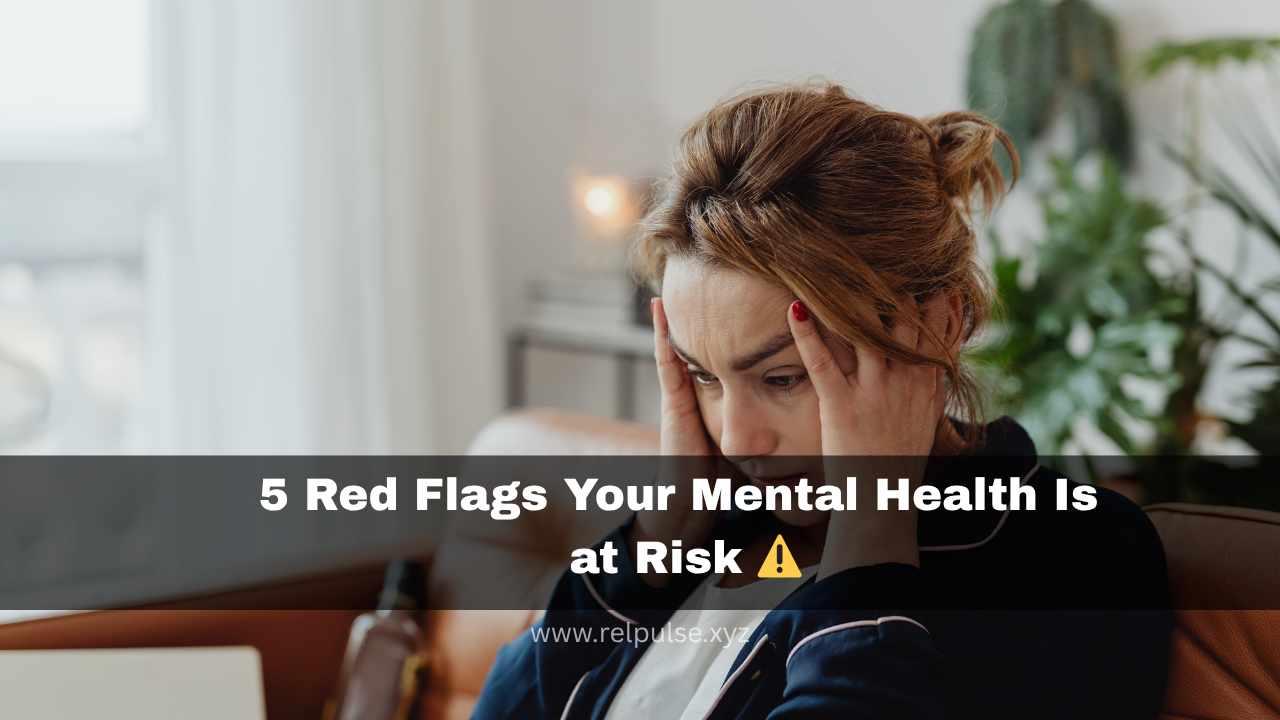
We often brush off persistent sadness, exhaustion, or irritability as “just stress” or “a rough week.” But these subtle shifts can actually be early indicators that your mental health is at risk. Ignoring these warning signs can lead to chronic burnout, anxiety disorders, or even depression conditions that rarely appear overnight but build slowly through neglect.
Your mind, like your body, has limits. When you’re overwhelmed, it sends quiet distress signals changes in sleep, appetite, focus, and emotional stability. Recognizing these early signs is the difference between temporary stress and a serious mental health decline.
This article highlights 5 clear red flags your mental health is at risk and why paying attention now can protect your emotional well-being for years to come.
Why Subtle Changes Deserve Serious Attention
Mental health issues don’t always start with breakdowns or panic attacks. Often, they begin with small, consistent deviations from your normal routines things you tell yourself are “no big deal.” The danger lies in normalization: when you start accepting these shifts as your “new normal,” your mind is already struggling to cope.
If you’ve noticed ongoing changes in your energy, motivation, or emotions that last for more than two weeks, it’s not laziness or weakness it’s a sign your mental health is at risk and needs attention.
1. Significant and Persistent Changes in Sleep or Appetite
Sleep and appetite are two of the most sensitive indicators of psychological stress because they are directly controlled by the brain regions responsible for emotional regulation.
The Red Flag: This goes beyond a few sleepless nights. You might experience chronic insomnia (trouble falling or staying asleep) or hypersomnia (excessive sleepiness and fatigue throughout the day). Likewise, your appetite may vanish entirely or swing to emotional eating as a form of self-soothing.
The Takeaway: These changes mean your nervous system is in overdrive. When your body can’t manage rest or nourishment properly, it’s a clear sign your mental health is at risk, and your internal balance is breaking down.
2. Loss of Interest in Activities You Once Loved
When your mental health is at risk, one of the first things to disappear is joy. Clinically known as anhedonia, this symptom is marked by a loss of pleasure in activities that used to make you happy whether that’s painting, reading, exercising, or spending time with loved ones.
The Red Flag: You start skipping hobbies, canceling plans, and going through the motions without feeling anything. You’re not necessarily sad you’re numb.
The Takeaway: This emotional flatness signals burnout or depression. Your brain is conserving energy by shutting down pleasure responses a sign it’s exhausted and needs recovery.

3. Severe Emotional Overreaction or Numbness
Emotional regulation is like a muscle — when your mental health is at risk, it becomes strained or unresponsive. You might cry over small inconveniences, snap in anger at trivial issues, or swing between irritability and emptiness.
The Red Flag: Everyday stressors feel unmanageable. You might overreact emotionally to small problems or, conversely, feel detached and indifferent to events that should move you.
The Takeaway: These emotional extremes reflect a breakdown in coping mechanisms. Your body is either trapped in fight-or-flight mode or completely shutting down from exhaustion. Either way, it’s a major sign your mental health is at risk and your emotional energy reserves are depleted.
4. Difficulty Concentrating and Persistent Brain Fog
Your brain needs emotional stability to function clearly. When your mental health is at risk, focus, memory, and decision-making are often the first casualties.
The Red Flag: You struggle to follow conversations, forget appointments, or feel like your thoughts are wading through fog. Even simple tasks, like replying to emails or paying bills, require enormous effort.
The Takeaway: This mental fatigue is your brain’s distress signal. It’s telling you it’s overwhelmed and overstimulated a cognitive cry for rest, structure, and professional support.
5. Increased Reliance on Unhealthy Coping Mechanisms
When emotional pain becomes too heavy to handle, your brain seeks shortcuts for relief even if they’re harmful. One of the clearest indicators your mental health is at risk is turning to self-destructive habits for temporary comfort.
The Red Flag: You find yourself drinking more, binge-eating, gambling, overspending, or escaping into endless scrolling on social media. These habits distract you from discomfort but never solve the root problem.
The Takeaway: Unhealthy coping mechanisms create a cycle of avoidance. They numb pain temporarily but magnify distress in the long run. The moment you notice these patterns, it’s time to reach out for help not judgment, but healing.
Taking Action: Protecting Your Mental Health
Acknowledging that your mental health is at risk doesn’t mean you’re weak it means you’re self-aware. The next step is seeking the right kind of help. Talk to your primary care doctor, therapist, or counselor. They can assess your symptoms, offer support, and guide you toward recovery.
If you’ve experienced two or more of these red flags for several weeks, consider this your wake-up call. Prioritize rest, connection, and professional support just as you would if you had a serious physical injury. Mental health deserves the same urgency and respect.
Ready to take the next step in your personal growth? Explore expert services from therapy to life coaching — available on Fiverr.
If you want to read more articles similar to 5 Red Flags Your Mental Health Is at Risk we recommend that you enter our Love life category.
FAQs
Q1: Is it normal to have one or two of these signs occasionally?
Yes. Temporary stress affects everyone. The concern arises when these symptoms persist for two weeks or longer, or when they interfere with daily functioning that’s when your mental health is at risk.
Q2: How can I bring up my concerns with my doctor?
Be specific. Try saying, “I’ve been struggling with sleep and focus for a few weeks, and I’m worried my mental health might be declining. Can we discuss next steps?”
Q3: What if I feel completely overwhelmed right now?
If you ever feel hopeless or have thoughts of self-harm, reach out for immediate help. Call your local emergency number (e.g., 911 in the U.S.) or contact a mental health crisis hotline available 24/7 in your region.
Q4: Can lifestyle changes alone fix mental health issues?
Healthy habits like sleep, exercise, and nutrition are powerful tools, but if your mental health is at risk due to deeper emotional or biochemical factors, professional therapy or medication may be necessary for full recovery.